
Best Under Deck Drainage System: Magnolia vs. Trex RainEscape vs. Zip-Up vs. DrySpace
We're going to kick things off by saying something most comparison articles won't start with: we run our business installing exactly one of these systems: Magnolia. We’ve been installing the Magnolia underdeck system exclusively since 2018. So no, this isn’t going to be a neutral review.
But here’s what we can offer that a neutral review can’t: we’ve now torn out and replaced enough failed under deck systems to know exactly how each one dies. In 2025, about 13% of our projects started with removing a system another company installed. So that’s the perspective we'll be writing from: what are the points of failure that cause an underdeck system to need to be torn out?.
The four systems, and how they actually work
Under deck drainage systems fall into two camps. Above-joist systems catch water right as it passes the deck boards, before it ever touches the framing of your deck. Below-joist systems let water fall through the deck, then catch it with a sloped ceiling underneath. That's all the background info you need to follow this comparison.
Trex RainEscape
Trex RainEscape is a popular above-joist system. It's a series of plastic troughs and downspouts that get stapled into the joist bays before the deck boards even get fastened down. The water never reaches your framing, which is genuinely the best argument for this system. The catch: it has to go in while the deck is being built, or you'll be paying someone to pull up every deck board first. RainEscape also isn't a finished ceiling. It's plumbing, and not very attractive plumbing at that. Once it's installed your work is only half done, since you still need to hang soffit or paneling under it if you want the space to look like a room.
Zip-Up UnderDeck
Zip-Up UnderDeck is a below-joist system made of vinyl panels that snap into rails mounted below the joists. It's sold heavily to DIYers, and honestly, for a DIYer on a tight budget it's one of the more approachable options out there. The panels create a sloped ceiling that carries water to a gutter at the edge.
TimberTech DrySpace
TimberTech DrySpace is similar to Zip-Up in concept: vinyl V-channels and panels that mount below the joists and drain to the outside edge. It comes in kits for both 12-inch and 16-inch joist spacing, in white or bone, and at roughly $4 per square foot in materials it's usually the cheapest name-brand option. You'll find it through deck-supply dealers rather than big-box stores.
Magnolia
Magnolia is a below-joist system too, but built from custom .027-gauge roll-formed aluminum instead of vinyl. The panels interlock, slope toward an integrated gutter, and install one of two ways: suspended 3.5 inches below the joists, or attached to a finished drop beam around the deck's perimeter (we explain both installation methods and how to choose which one is best for you in our surface vs. suspended post). The system sets its own discreet pitch away from the house instead of relying on your deck framing, meaning that water always is diverted away from your home. And each panel is individually removable after installation, which matters more than it sounds: you can get back above your ceiling to service wiring or add something new without demolishing anything. It's the only one of these four popular products that's made out of metal rather than plastic.
What does Minnesota Weather Does to Each Of These Underdeck Systems?
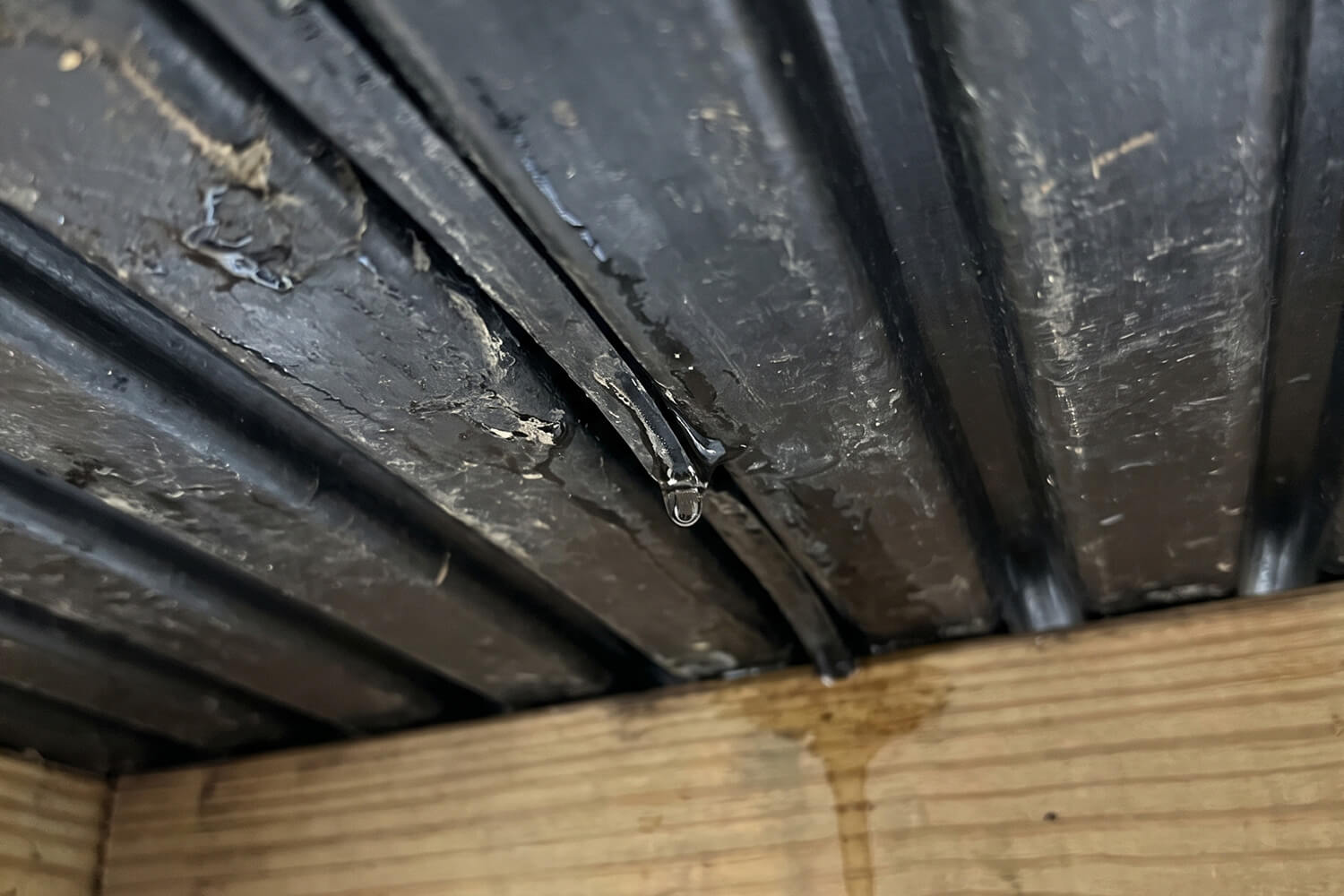
The state you install one of these systems in matters more than almost anything else on this page. A drainage system that works fine in Raleigh, NC can be a liability in Chanhassen, MN, because what's coming down on your underdecking system here isn’t just rain. It’s the freeze-thaw cycle, and it can happen 40 or more times a winter here.
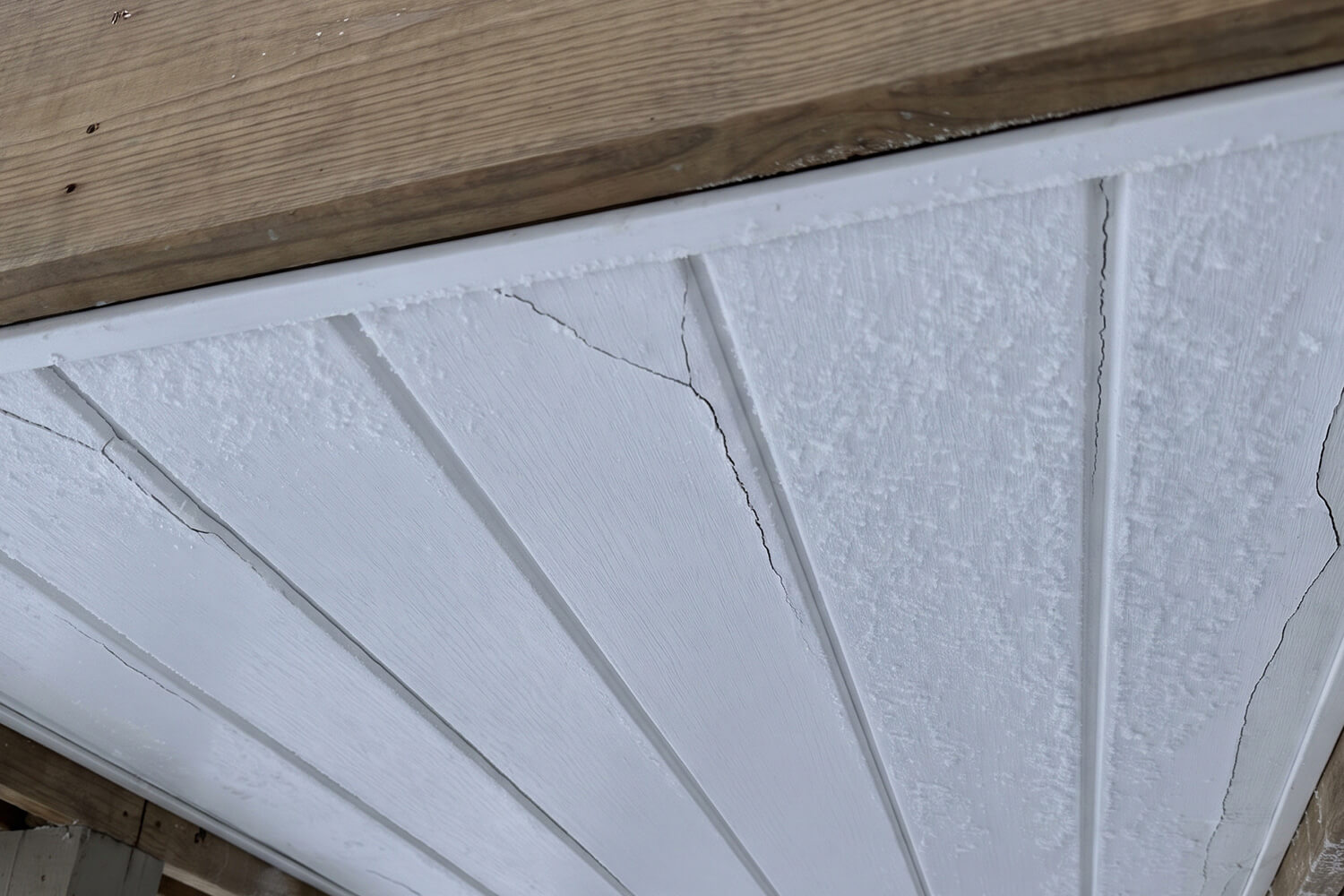
Temperature swings affect almost everything, and as temps drop in the winter, vinyl panels start to contract and stress. And don't get us started on pooling water. Systems that aren't installed perfectly retain pools of water everywhere, and as those pools freeze and thaw, they expand and contract against the material they're sitting in. Do that forty times a year and the material fatigues. Panels get brittle in the cold, sag in the summer heat, and the snap-fit joints that made Zip-Up easy to install become the first thing to let go. We've pulled down vinyl ceilings that looked wavy as a potato chip after six winters. The homeowners weren't negligent. The material just wasn't built for this.
RainEscape has a different problem. The troughs are protected from UV and mechanical damage because they live above the ceiling, and the concept sounds promising. But what we see fail most often is the installation, not the product: a staple through the membrane, a trough pitched flat, a seam that wasn't taped right. When it's buried under your deck boards, a small mistake is invisible until it stains the ceiling below it. Fixing it means opening the deck back up.
Aluminum, on the other hand, doesn't care about the elements. It doesn't absorb water, it doesn't get brittle at 20 below, and a properly pitched aluminum panel carries snowmelt the same way in February as it does in June. That's the whole argument for Magnolia in one sentence, and it's why we picked it over every vinyl system on the market when we chose what to stake our name on.
And when vinyl systems go for a time without cleaning and maintenance, they don't just sag. We tore out a vinyl system recently where the clogged panels had collected so much debris over the years that there were literally trees sprouting in the underdeck space. Not moss. Trees! These systems can collect more debris than you think, and if the panels you've installed are on the weaker side, that can spell problems for your entire ceiling system.
Side-by-side
| Magnolia | Trex RainEscape | Zip-Up | DrySpace | |
|---|---|---|---|---|
| Type | Below-joist, aluminum | Above-joist troughs | Below-joist, vinyl | Below-joist, vinyl |
| Works on an existing deck? | Yes | Realistically no | Yes | Yes |
| Is it the finished ceiling? | Yes | No, ceiling sold separately | Yes | Yes |
| Cold-climate durability | Excellent | Good (if installed right) | Fair | Fair |
| Snow/ice tolerance | High | High | Low to moderate | Low to moderate |
| Materials cost/sq ft | Sold installed only | ~$6.50 to $8.50, before the ceiling | ~$7 to $8 | ~$4 |
| Colors | 28 | n/a (it’s hidden) | 3, paintable | 2 |
| Warranty | 1-yr workmanship from us | 25-year limited | Limited lifetime | Manufacturer limited |
| Panels removable later? | Yes, individually | No (buried under decking) | Partially | No |
| Who installs it | Trained dealers | Deck builders, during construction | Often DIY | Often DIY |
Two notes on that table. RainEscape’s materials number looks middle-of-the-pack until you remember it’s not a ceiling, so a finished room means adding soffit or paneling on top of it. And the vinyl warranties are real, but read what they cover: a lifetime warranty on the material doesn’t cover the sag, and sag is how vinyl fails here.
One more thing an honest comparison owes you: none of these systems is 100% waterproof. Vendors of the vinyl systems will tell you, when pressed, that they keep about 95% of the water out. A well-installed aluminum or trough system does better than that, but wind-driven rain and splash exist, and anyone promising you a hermetically sealed outdoor room is selling something. The realistic goal is a space where the furniture stays dry and you’d happily sit out a thunderstorm.
The systems we didn’t rank (and why)
The four systems above are the ones we get asked about most. After all, they're made by some of the biggest brands in the underdeck space! But we'll admit that the under deck product category is bigger, and a comparison that pretends otherwise isn't much of a comparison. So, very quickly, we'll address the rest of the contenders:
Other aluminum systems. Magnolia isn't the only metal option. If you're comparing aluminum to aluminum, the factors that are going to help you separate the winner from the pack are panel thickness, whether panels are individually removable, whether the gutter is integrated or bolted on, and who's doing the install. We're familiar with the alternatives, and we think Magnolia wins in a comparison, but it's a fair fight, and we'd rather you do your research than assume metal is metal.
DekDrain. A rubber membrane system with above-joist and below-joist versions and a fully transferable lifetime warranty, the strongest warranty in the category. It's drainage, not a finished ceiling, so like RainEscape you'll have to figure out the look of your ceiling separately. And like RainEscape, the installation has to be done very carefully.
UpSide Deck Ceiling and CertainTeed UnderShield. More vinyl below-joist systems, comparable to Zip-Up and DrySpace. Everything we said about vinyl in this climate applies to these systems too.
Corrugated panels and DIY membrane rolls. The budget-and-special-cases tier: corrugated PVC panels screwed to sloped furring, rubber membrane rolls (Goberco and similar) draped through the joist bays, and bladder-style membranes installed above a separate finished ceiling.
Dexerdry and similar board-gap seals. A different idea entirely: PVC flanges that seal between the deck boards so water sheds off the surface and never comes through. Clever for new builds with compatible decking, but it turns your deck surface into the roof, and every future board replacement disturbs the seal.
What each one costs, honestly
Vinyl systems win on price and it's not close. A DIYer can panel a small deck with Zip-Up or DrySpace for low four figures. If your budget stops there, we'd rather you install one of those than leave the space dripping, truly.
A professionally installed Magnolia system runs around the high $30s per square foot installed, which puts a typical project somewhere between $6,000 and $25,000 depending on deck size and options like lighting and fans. Our cost calculator will give you a rough number for your deck's dimensions in about a minute.
The math we'd ask you to run isn't price. It's price per year of service. A vinyl ceiling that needs replacing after a handfull of Minnesota winters isn't cheap, it's just deferred. An aluminum system is a guarantee that this is the last time you have to worry about your underdeck, and nobody has ever hired us to tear a Magnolia underdeck out.
Questions we hear on almost every estimate
So which one should you buy?
Building a new deck right now, and budget is tight? Have your builder quote RainEscape while the frame is open, and put a real ceiling under it. It's the only moment that system makes any sense. If you want the ceiling to be aluminum anyway, compare the combined cost against Magnolia before you commit.
Existing deck, a very tight budget, and you're handy with tools? Zip-Up or DrySpace will keep the patio furniture dry for a little while. Go in with clear eyes about the lifespan and be prepared to check the panels closely each spring.
Existing deck, and/or you want it done once? That's the job Magnolia was built for, and it's the only system on this page we'll put our warranty and our name behind. We've installed more than 425 of them across the Twin Cities, and we'd love to help you with your deck too!
Get a Real Estimate: Quick and Easy
Want a number for your deck? Call us at 612-720-0330 or run your dimensions through our quick and easy cost calculator. Estimates are free and we don’t do the hard-sell thing that our competitors often like to do.