
What Is Underdecking? How It Works & Why Homeowners Need It
If you have a second-story deck and an unused, soggy patio space below it, chances are that you've already noticed the problem: rain falls right through the gaps in your deck boards, drips on anything underneath, and turns what could be a great outdoor living area into somewhere you'd rather avoid. Underdecking is the solution to that problem, and it's a simpler, more durable, and more attractive solution than most homeowners expect.
This page explains exactly what underdecking is, how an underdeck system works, and what it can do to transform the space beneath your deck. If you're ready to skip the background and start planning your project, you can contact us for an estimate any time.
What Is Underdecking?
Underdecking is a system of interlocking aluminum panels that are installed beneath your deck boards, attached to the underside of your deck's joists. The panels are pitched at a slight angle, one that you'd never notice from below, so that any rain or moisture that falls in between the deck boards and lands on the underdeck panels. The water flows across the panels toward a hidden gutter channel running along the outer beam of the deck. From there, all the water drains through a downspout and away from your home.
The result is a completely dry, finished space under your deck, regardless of what's happening above. Even in a Minnesota downpour, not a single drop reaches the patio below.
What makes underdecking unique is that it does three things simultaneously that most people assume would be handled by three separate products:
- It acts as a drainage system, capturing and routing water away from the space below and keeping everything dry.
- It acts as a waterproofing barrier, creating a continuous, weather-tight surface between the deck above and the living space below.
- It acts as a finished ceiling, with the visible aluminum panels creating an attractive, architectural surface that looks intentional, not improvised.
There is no separate drainage system, no waterproofing membrane, and no multiple layers of ceiling material. One system handles all three. That's why the terms "under deck drainage system," "under deck ceiling system," and "under deck waterproofing" all refer to the same product — because they are the same product. We explain each function in more detail on its own page.
How the System Works
Walk under a finished underdecking installation and the first thing you notice is how clean it looks. The panels are smooth aluminum, typically finished in white to match most residential soffit and fascia. There's no visible hardware, no visible guttering, and no sign that there's a precision-engineered system hiding above your head. That's by design, and a lot more goes into it than you'd expect!
Here's what's included in the system:

Commitment to Quality: The Magnolia Underdecking System
Underdeck Essentials exclusively installs the Magnolia underdecking system, and that's a deliberate choice, not just a convenient supplier relationship. Magnolia has been manufacturing under deck drainage and waterproofing systems since 2003. Most of the very first Magnolia systems ever installed are still performing flawlessly today. That kind of track record should matter when you're making an investment in your home, just as much as it matters to our reputation as a trusted installer.
What really sets Magnolia apart from the generic aluminum panel systems and cheap DIY kits you'll find at home improvement stores is the engineering behind each component:
- Individual panels can be removed and reinstalled independently, which is critical for non-destructive maintenance, and for easily accessing utilities routed above the system.
- The panel profile is designed so that the accumulation of debris is kept to a minimum while maximizing drainage efficiency. The perfectly smooth face of the panel sheds water and dirt rather than catching it.
- Every metal component is engineered for stability, and to accomodate for the expansion and contraction that comes with Minnesota temperature swings — from -20°F winters to 95°F summers. Cheaper systems will almost always crack, warp, or work loose eventually in these conditions.
Our team has installed this system more than 425 times since 2018. We know exactly how it behaves in this climate, where the edge cases are, and how to engineer each installation to perform year after year without issues.
What You Can Do With the Space
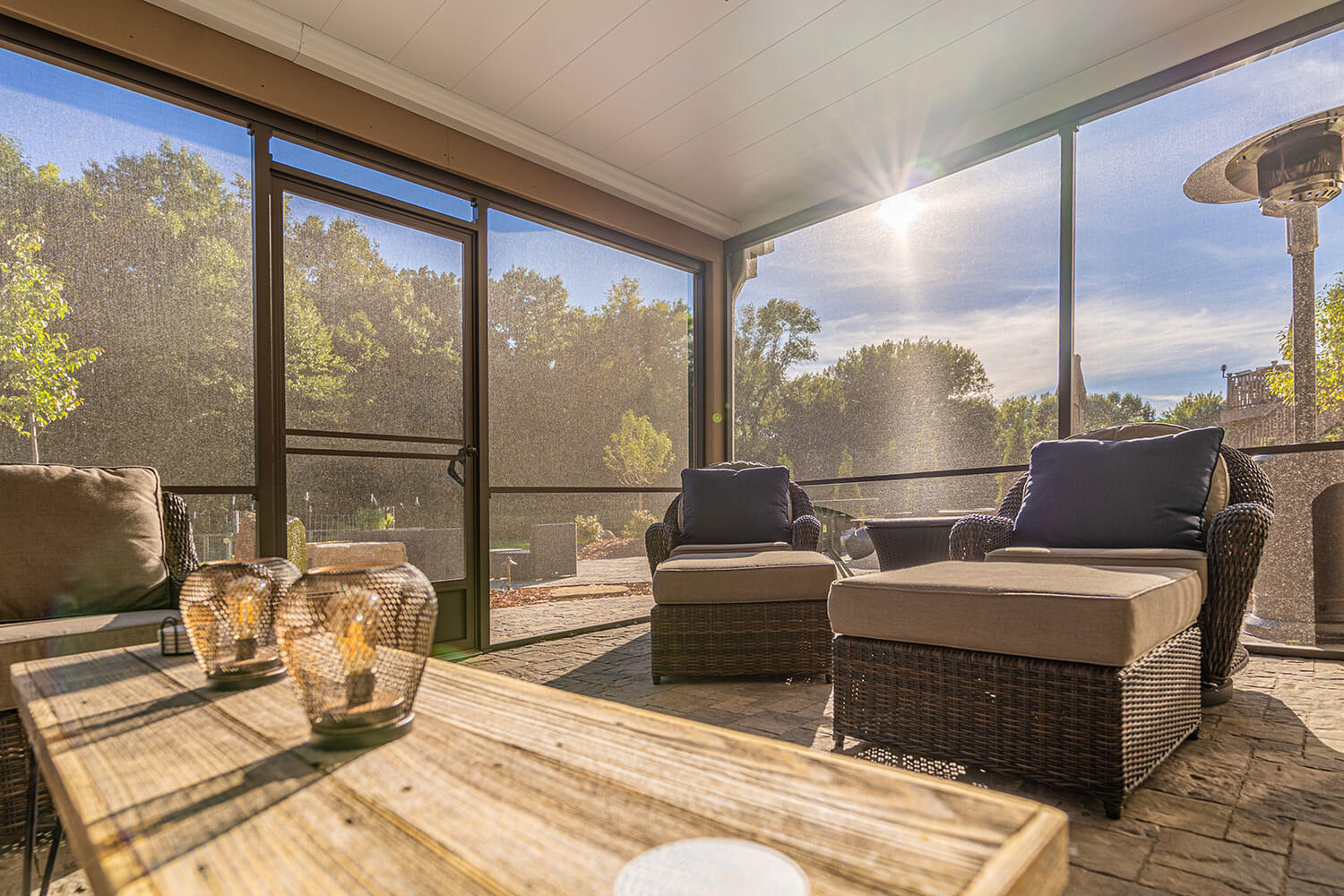
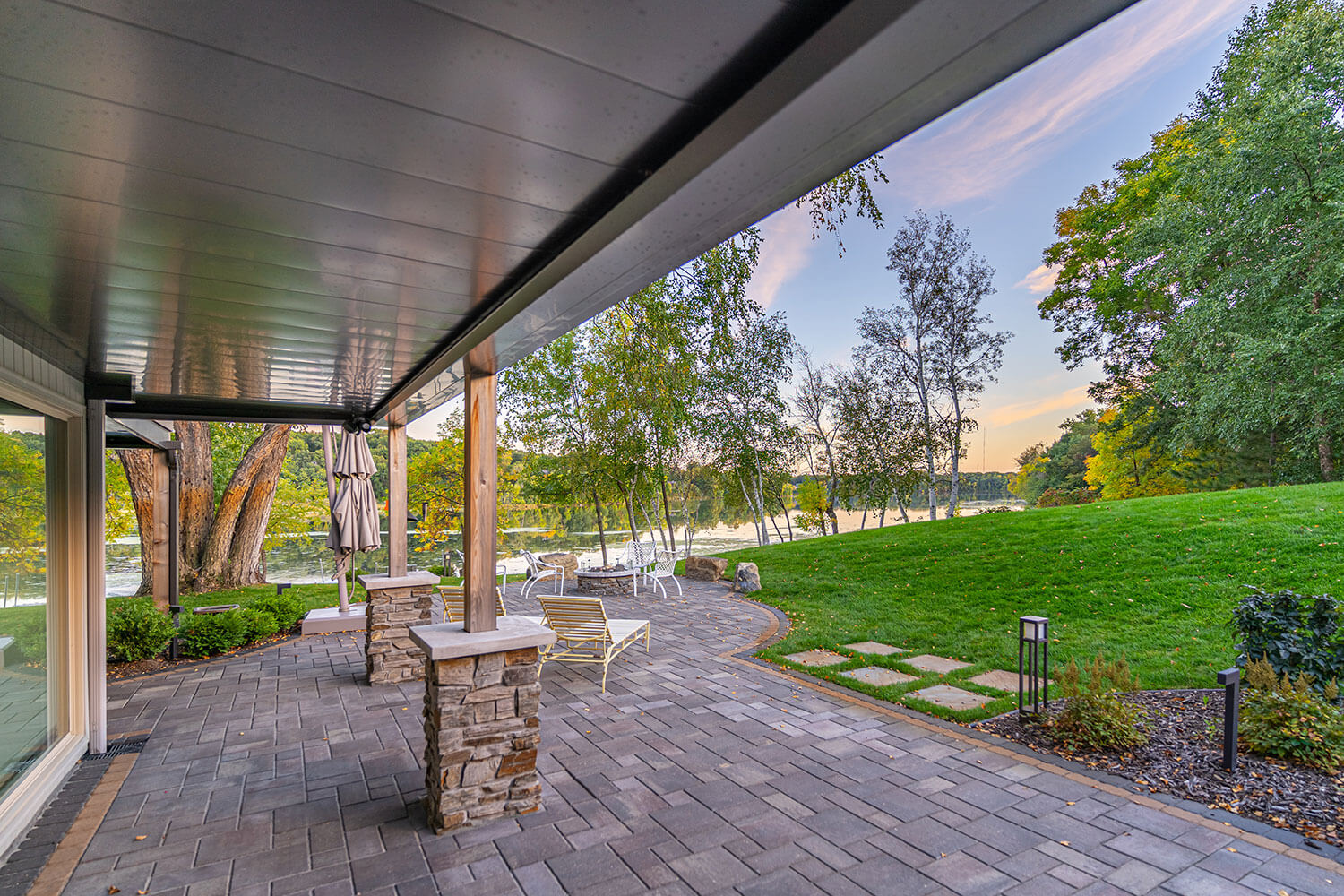
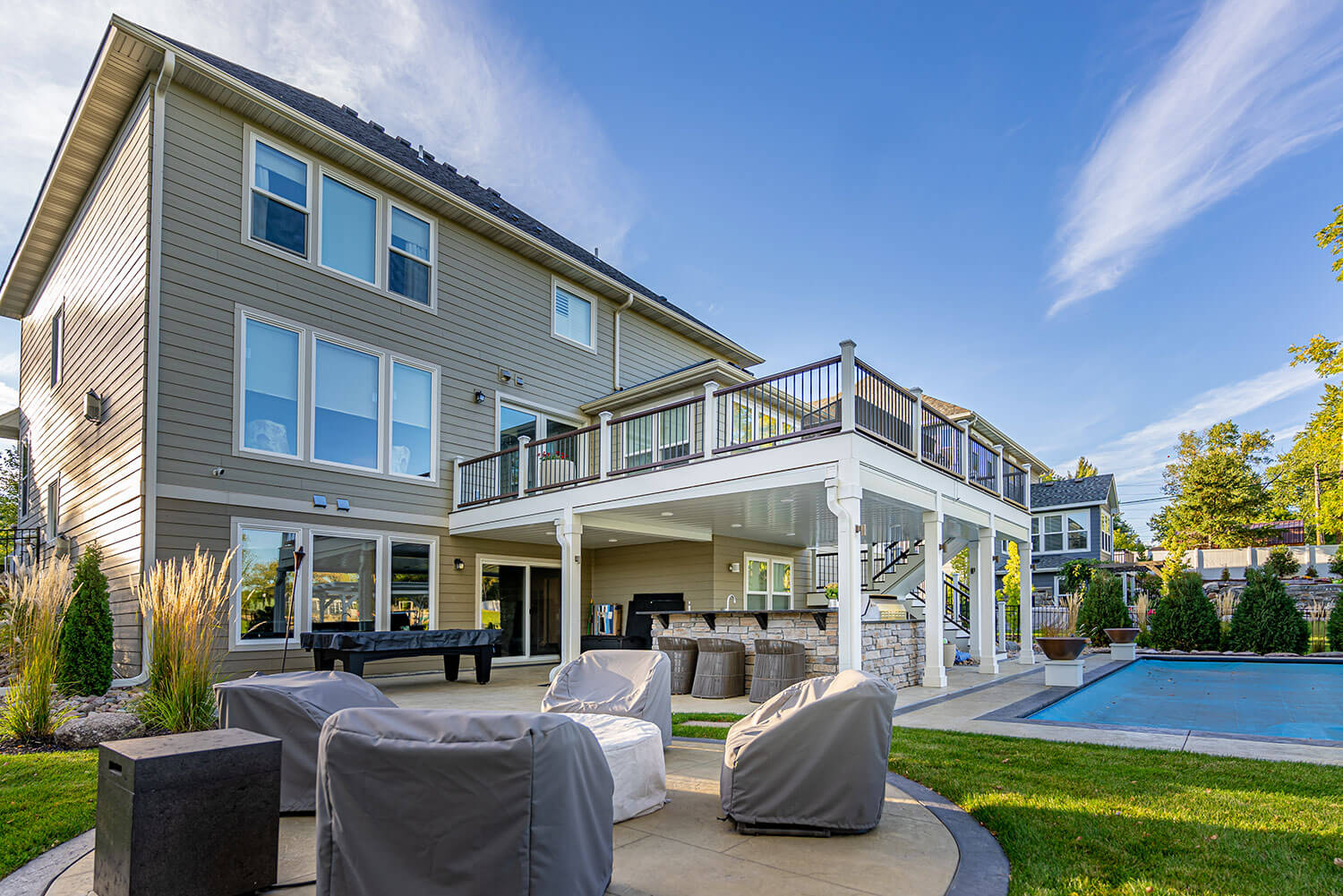
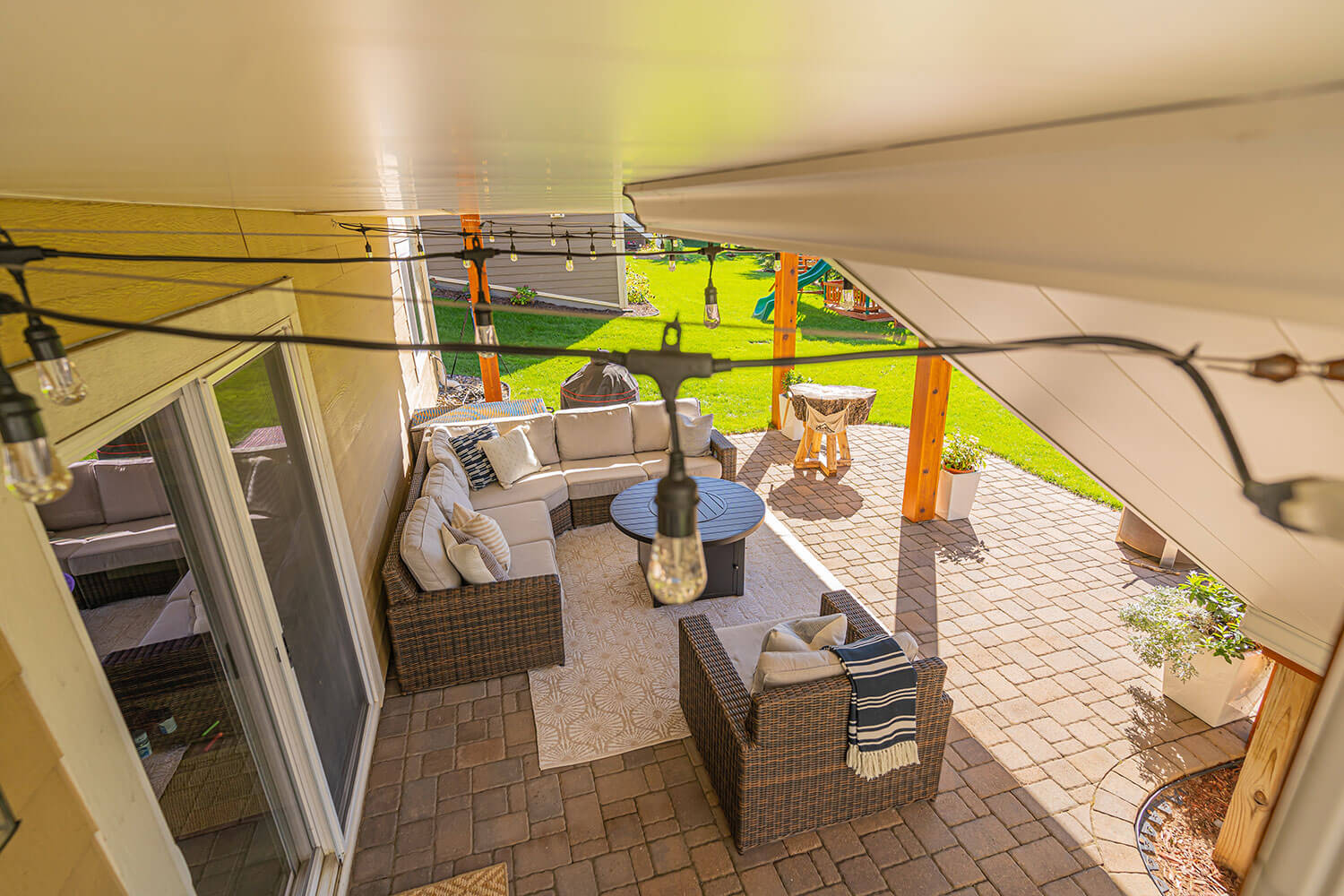
The moment an underdecking installation is finished, you have a dry, protected outdoor area beneath your deck. What you do with that area is up to you, and the possibilities are broader than most people expect! We've installed systems that turned into everything from simple covered patios to fully enclosed outdoor rooms with kitchens, heaters, and entertainment setups.
A few of the most popular configurations we see:
- Open patio with seating — this is probably the most common setup. You bring in some furniture, a rug, maybe a firepit or gas heater, and the space under your deck can give you nearly year-round use in the Twin Cities.
- Outdoor kitchen or grilling area — the deck provides natural shade and weather cover, and the ceiling panels above protect your culinary masterpieces from the elements.
- Hot tub or spa retreat — the dry, enclosed feel of an underdecked space pairs surprisingly well with a spa setup. Add privacy screens and you've got something genuinely special and luxurious feeling.
- Enclosed outdoor room — screen walls or solid panels can be added to fully enclose the space under your deck, turning it into a three-season room or a screened porch that's protected from insects and wind.
- Storage and utility — for homeowners who just need dry, accessible storage under the deck, the system works just as well for that purpose.


Can I Add Underdecking to My Existing Deck?
This is one of the most common questions we get, and the answer is absolutely yes. You don't need to be building a brand new deck to benefit from underdecking. The Magnolia system attaches to the underside of your existing deck's joist structure, which means we don't disturb your deck surface, remove any decking, or do any work above the deck at all. Most existing-deck installations are completed in one to two days.
The main thing we need to evaluate before installation is the condition and spacing of your existing joists, the pitch of the deck, and where the downspout can discharge. We assess all of this during the estimate visit, and we'll tell you honestly if there are any complications or special circumstances that apply to your deck.
Frequently Asked Questions
Professional vs. DIY Underdecking: What's the Difference?
We all know the "80 percenter" — dives in with confidence, gets the project mostly functional, but loses interest before the finishing details and proper sealing get done. With underdecking, that last 20% is everything. This isn't just an appearance issue. It's water management, and water doesn't forgive shortcuts.
In 2025 alone, we replaced seven under deck systems that had been installed using big-box PVC kits — typically by a handyman or general contractor who'd never done one before. In most cases the original installer was gone. The material hadn't survived Minnesota's winters. Those homeowners ended up paying for two installations and spending roughly 50% more than if it had been done right the first time.
Beyond material selection, the detail that separates a professional installation from everything else is flashing. Our rule: when in doubt, flash it out. That means redundant flashing at every vulnerable point — including areas outside the panel system itself, like the top grain ends of deck posts — so water is diverted before it can become a problem. A professional isn't just thinking about today's rainstorm. They're thinking about year ten and year twenty.
If you're weighing the cost of professional installation against a DIY kit, the honest math is simple: done wrong, you pay twice.


Is Underdecking Worth It?
If you own a home with a deck that sits above an area that could be turned into an outdoor living space, then the answer is almost always yes. But let's be direct about why.
The practical case is simple: you have a space that currently can't be used when it's raining, and rain is a regular event in Minnesota. Underdecking turns that unusable space into usable space. You're not building an expensive addition or expanding your home's footprint; you're just unlocking square footage that already exists.
The financial case is also real. Finished outdoor living space consistently adds to your home's resale value. A dry, well-finished under deck patio is a much more compelling selling feature than a raw, exposed joist space. We've had homeowners tell us they got comments on it in every single showing.
The aesthetic case is probably what surprises people most. A properly installed underdecking system looks truly "finished", not like a big-box home store product was haphazardly bolted on to the bottom of a deck. The aluminum ceiling panels are clean and neutral, the gutters are hidden, and the downspout integrates with the house. From the patio, you look up and don't see the underside of a deck, you see a real ceiling.
Ready to See What's Possible Under Your Deck?
We've completed more than 425 underdecking installations across the Twin Cities since 2018, and no two decks are quite alike. The best way to know what your specific space would look like — and what it would cost — is to have us come take a look.
Estimates are no obligation, and we'll give you a straight answer about whether your deck is a good candidate and what configuration would work best. Get in touch, or give us a call at 612-720-0330