Under Deck Drainage System Maintenance: Tips for Cleaning & Care
December 17, 2025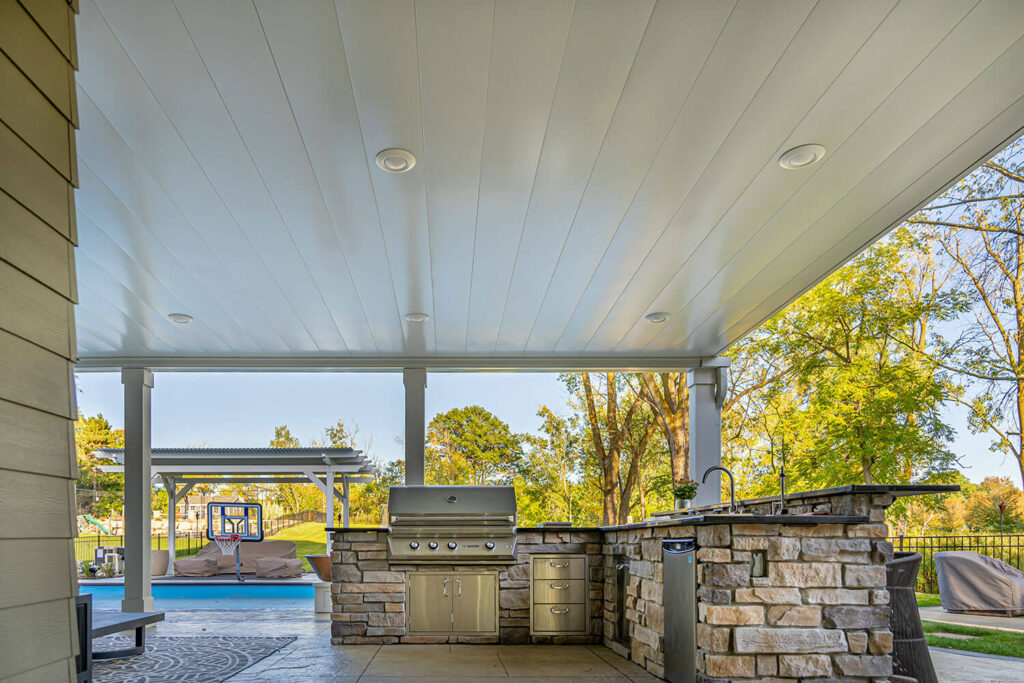
Homeowners often look at the space beneath their raised deck and see little more than a shaded storage area, good for keeping a wheelbarrow dry but not much else. But with the right under deck roofing material, that same forgotten space can become a truly usable outdoor living area. Think hot tub retreats, outdoor kitchens, screen rooms, or cozy fire-pit hangouts, all protected from rain and the elements.
Today’s under deck systems generally fall into three material categories:
- Rubber (EPDM membrane systems)
- PVC or plastic panel systems
- Metal (aluminum or steel ceiling systems)
Each approach performs the core waterproofing function: collecting water and channeling it away from the living space below. But they differ significantly in appearance, longevity, cost, and required long-term maintenance.
Today we're going to compare under deck gutter systems in each category, based on verified installation realities and homeowner experiences.
Rubber (EPDM) Under Deck Systems
Rubber systems use EPDM roll membranes—the same material often used for flat roofs. When installing an under-deck, EPDM is draped between the joists, with channels of slack to direct and funnel water from the house toward a gutter. Installation typically happens before deck boards go on, making EPDM a better fit for new deck builds than retrofits.
Advantages
- Cost-effective
Rubber EPDM offers an economical and functional waterproofing layer at a low cost compared to other systems. - Keeping things simple
Since EPDM goes in during deck construction, the deck builder typically handles it, meaning there's no need to hire an under deck specialist.
Disadvantages
- Easy to damage
One mistake in screw penetration, or small puncture in the rubber layer, can cause a pinhole leak that is extremely difficult to locate and repair later. - Not very attractive
The EDPM doesn't hide the joists of the deck from underneath, meaning that while the space under your deck will stay dry, it won't look very aesthetically pleasing. The combination of exposed joists and rubber creates a droopy, unfinished look, and many homeowners choose to cover it up with yet another layer of ceiling panels to try to hide it. - Leaks may require removing the ceiling
Unfortunately, if a ceiling is added later, an inevitable leak investigation requires a complete disassembly of the ceiling to locate the problem.
Bottom line: Rubber underdecking can be best for new builds on a tight budget, but due to the long-term maintenance issues it can have, it's not our first recommendation.
PVC or Plastic Under Deck Systems
It's not hard to find PVC under deck systems available as DIY kits from home improvement stores. They snap together and direct water forward but often rely more on tension between plastic joints than any actual watertight sealing.
Advantages
- Very economical
PVC kits are typically the cheapest under deck roofing materials available. Not taking labor into account, a PVC underdeck material kit can often cost even less than EPDM, and about 1/3 of the cost of a professionally installed aluminum or steel underdecking system. - DIY-friendly
Particularly adept and handy homeowners with a baseline set of tools can usually install PVC systems, and there's plenty of Youtube instructional videos on how to assemble them. - Easily accessible
Kits come in standard lengths and are easy to find at your local big box store.
Disadvantages
- UV damage
Unfortunately, PVC becomes brittle in UV light, meaning that in the sun, it lacks the longevity of metal, especially on the front and sides where it receives the most sun exposure. Because PVC also expands and contracts significantly with swings in temperature, this brittleness means it's very likely to crack in just a few years, causing leakage. - Lower aesthetic quality
PVC systems are meant to be functional, not refined, but often look flimsy and less finished compared to metal systems. - Material waste
Because PVC systems are mostly sold in fixed panel lengths of 8', 12' and 16', installing this type of system on a deck that doesn't conform to those dimensions can lead to a lot of unnecessary cutting and waste. - High real-world failure rate
If you're not a seasoned DIY-er, it's not always easy or cheap to find an installer who has experience with a lower-end system like this. This is why most failed PVC systems that we've removed from decks were installed by a friend, relative, or contractor that thought it looked easy enough and then disappeared when the leaks started. - Leaks during long rains
Because PVC systems don't use sealants, their joints can hold up against light rain, but often let water through during prolonged and heavier storms, where the pressure of the water overwhelms the points of connection.
Bottom line: Cheap and DIY-friendly, but has the highest likelihood of leaks and the lowest lifespan.
Aluminum or Steel Under Deck Systems
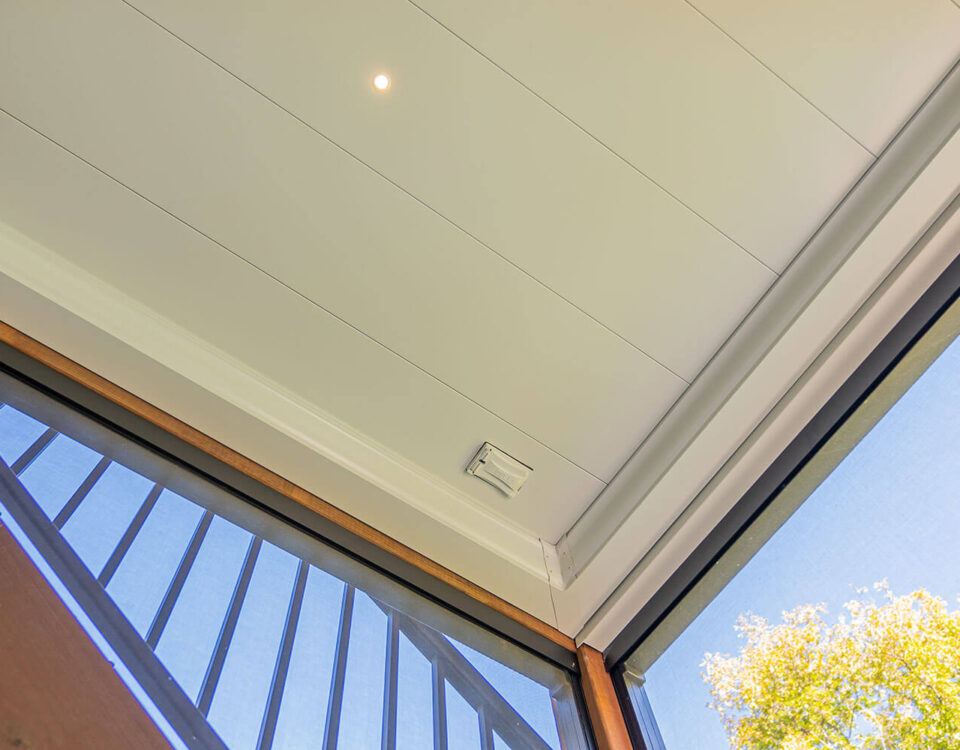
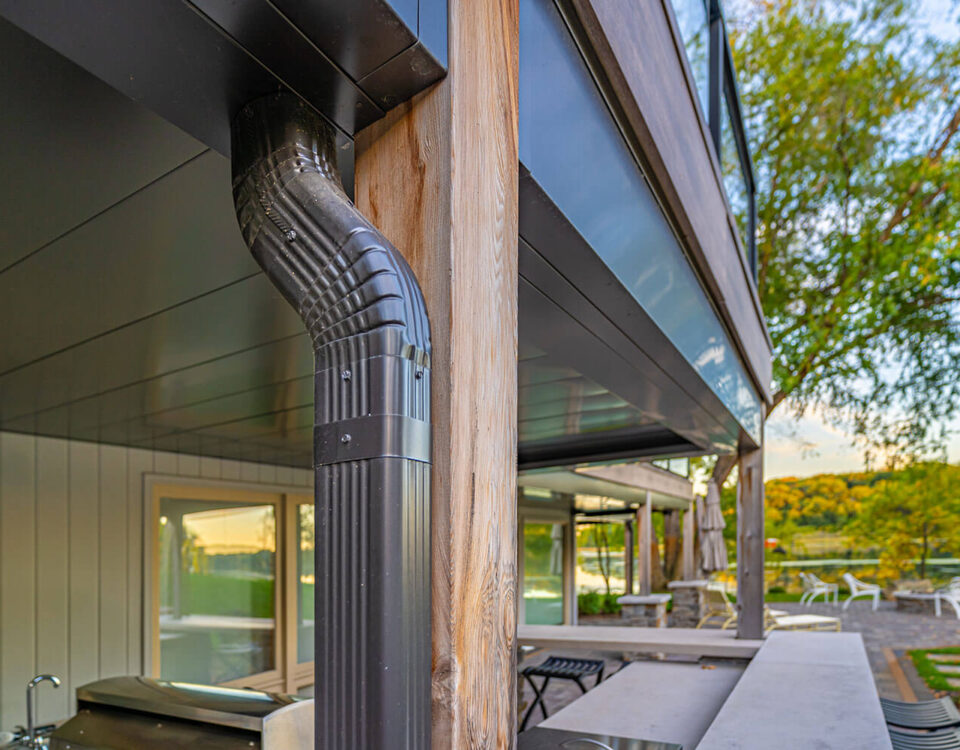
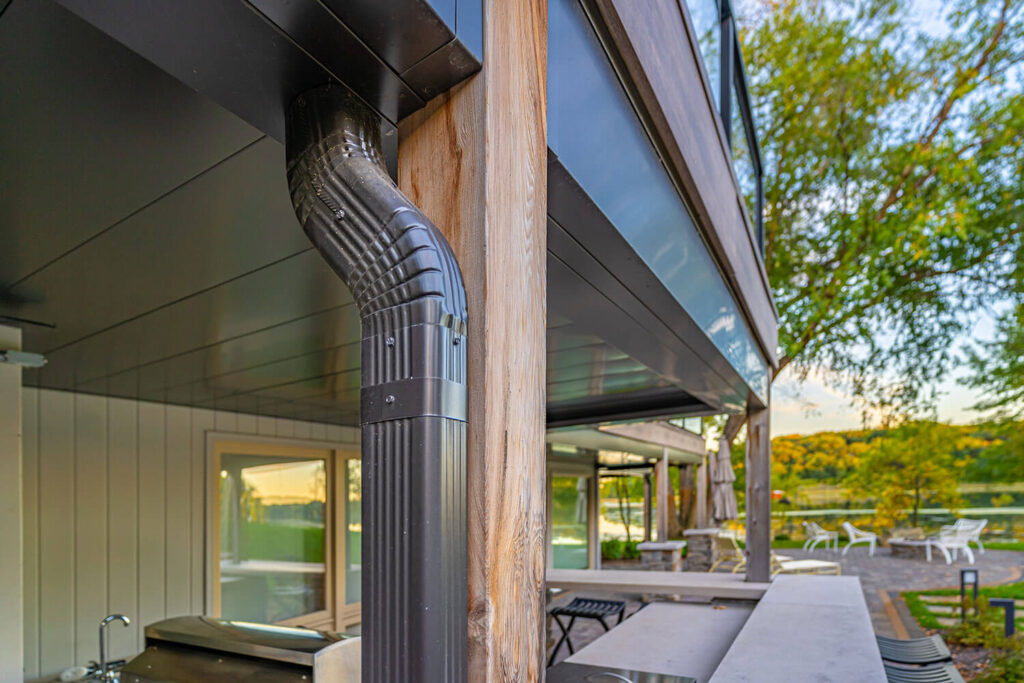
Metal under deck systems are a premium, long-term solution. They create a rigid, attractive outdoor ceiling with integrated channels to move water to the deck edge. Most installers prefer aluminum for its light weight, corrosion resistance, and long-term performance.
Advantages
- Superior finished appearance
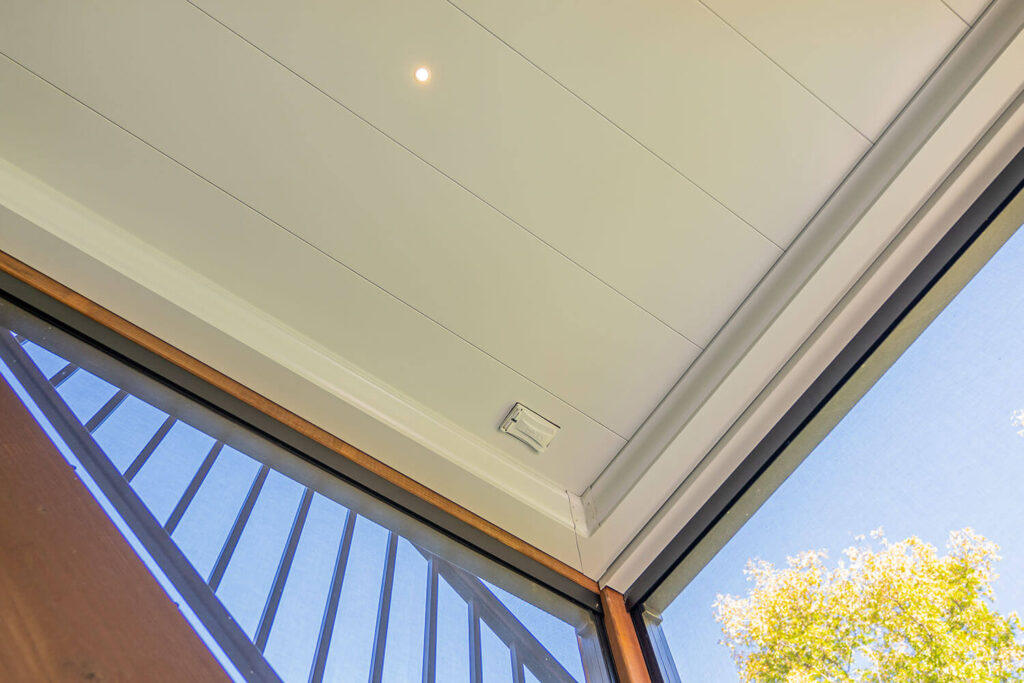
Creates a clean, solid and structurally superior ceiling that dramatically improves an outdoor space. - Ideal for lighting and fans
Rigid panels allow for easy removal, meaning lights and ceiling fans can be easily added at the time of installation or later on. - Excellent for screened-in rooms
Can be installed concurrently with screen systems to allow for an even better experience away from the bugs. - Longest lifespan — 25+ years
Metal systems last decades with minimal maintenance. - Adds home value
Professionally finished under deck living spaces attract buyers and increase perceived value.
Disadvantages
- Highest upfront cost
Premium materials and skilled installation greatly increase price compared to PVC or EPDM. - Not DIY-friendly
Installing a metal under deck system isn't a do-it-yourself project, even for the most experienced and handy. Installers typically require extensive training to install the product correctly. - More complex installation
Premium products often go on more premium (and complicated) decks, which can require complicated transitions, angles and miters, as well as precise sealing to prevent dissimilar metals from touching and causing corrosion.
Bottom line: The best-looking, most durable, most reliable option for homeowners wanting a true outdoor living space.
Side-by-Side Comparison
| Feature | Rubber (EPDM) | PVC / Plastic | Aluminum / Steel |
|---|---|---|---|
| Cost | $ | $ | $$$ |
| Lifespan | 10–15 years | 5–10 years | 25+ years |
| DIY-Friendly | Low | High | No |
| Maintenance | High | Medium | Very Low |
| Aesthetics | Low | Medium | High |
| Leak Risk | Medium | High | Very Low |
| Best Use Case | New decks on tight budgets | DIY installs | Long-term outdoor living |
Conclusion: Which Under Deck Roofing Material Is Best?
Under deck waterproofing is simple in concept: capture water and direct it downhill away from the living area. But the material you choose determines how long it stays dry, how good it looks, how often you’ll maintain it, and whether your investment adds home value. "You get what you pay for" was never more applicable than here.
Installing an EPDM membrane with a conscientious installer might turn our great, but most deck installers have stopped offering it due to call back problems they don’t feel they had great control over.
A PVC product may also get you an underdeck cheaply. If you are handy, and don’t mind minor leaks, the cost of entry can be fairly low. However, of the customer projects Underdeck Essentials completed in the summer of 2025, 13% involved tearing out a failed PVC system, just to replace it with our aluminum Magnolia system.
Metal underdecks certainly are the most costly, not only because of the material expense compared to rubber and plastic, but because of the skilled install labor required to do the job correctly. But they also last the longest and suffer from far less problems along the way.
If your goal is a finished outdoor living space that stays dry, attractive, and worry-free for decades, a properly engineered metal under deck system is the best long-term solution.